
The NBA Is Bigger Than Ever. So Why Does It Feel Smaller?
For much of the past two decades, NBA All Star Weekend served as a cultural anchor point rather than simply a midseason exhibition. It brought together sport, music, fashion, celebrity, and global attention in a way few non football events ever have. Even when the game itself lacked defensive urgency, the weekend carried density. Audiences showed up because it felt like something consequential was unfolding at the same time.
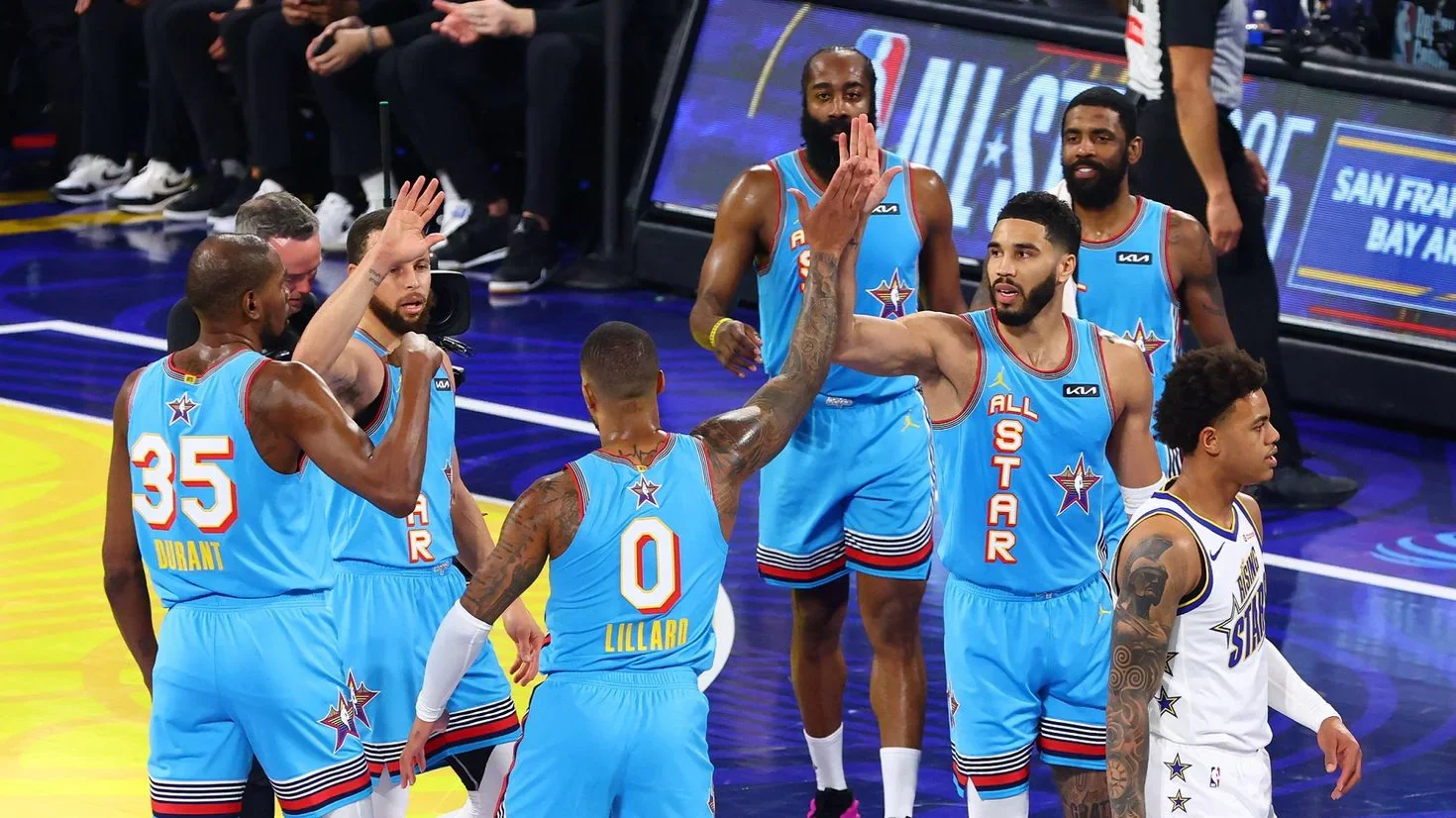
That density has thinned. The 2025 All Star Game averaged roughly 4.7 million viewers, one of the lowest audiences in the event’s history and far below the seven to nine million viewers it regularly attracted in the 2000s. The reaction has focused on player effort and format changes, but those explanations treat visibility as cause. The more meaningful shift lies in how the league now lives within culture.
By most commercial measures, the NBA is stronger than it has ever been. In 2024 the league finalized an 11 year media rights agreement reportedly worth approximately 76 billion dollars with Disney, NBCUniversal, and Amazon, more than doubling the value of its previous deal. Franchise valuations have climbed steadily into the billions, with leading teams valued between seven and eight billion dollars. Leaguewide attendance remains robust at roughly 97 percent of arena capacity. Financially, the trajectory suggests expansion rather than contraction.
Yet perception tells a different story.
The 2025 NBA Finals averaged approximately 11 to 12 million viewers per game, down from the 15 to 20 million averages common in the early 2000s. Even accounting for broader declines in linear television consumption, the long term slope remains clear. Traditional ratings reinforce the sense that the league occupies a smaller share of collective attention than it once did. At the same time, the NBA generated more than 5 billion social video views during the 2025 Finals alone. Its digital channels command tens of millions of subscribers worldwide, and League Pass subscriptions continue expanding internationally, particularly across Europe and Asia. Nearly 30 percent of current players are born outside the United States, the highest share in league history. The audience has not disappeared. It has redistributed across platforms, formats, and time zones.
Basketball is no longer experienced primarily as a three hour appointment. It unfolds as a continuous stream of moments that circulate independently of the broadcast. A forty point performance travels across social platforms before the game concludes. A highlight becomes a global artifact detached from its original context. Podcasts and creators metabolize games into fragments that often travel further than the live telecast itself. The league has mastered this environment and expanded its reach dramatically, yet scale does not automatically recreate ritual.
Recent attempts to compensate for this fragmentation illustrate the tension. For the latest All Star Weekend, the league invited hundreds of influencers and creators to amplify the spectacle across social media. The intention was clear: extend visibility and meet younger audiences where they live. The reaction, however, revealed a disconnect. Many fans criticized the strategy as superficial, arguing that hype without competitive meaning only underscored what was missing. The backlash suggested that visibility alone cannot substitute for shared stakes.
Football still benefits from structural scarcity. Each NFL team plays 17 regular season games, compared with the NBA’s 82. The compression of schedule creates urgency that is easy to understand and easy to remember. Regular season NFL broadcasts in 2025 averaged well over 17 million viewers per game, and the Super Bowl continues to surpass 110 million domestic viewers. The clarity of when and where to watch reinforces habit. Basketball, by contrast, operates within abundance. National games rotate across multiple broadcast and streaming partners under the new agreement, and local distribution varies by market, with regional sports network instability adding further complexity. As optionality increases, friction follows. When friction rises, consistency weakens, and even marquee events struggle to feel indispensable.
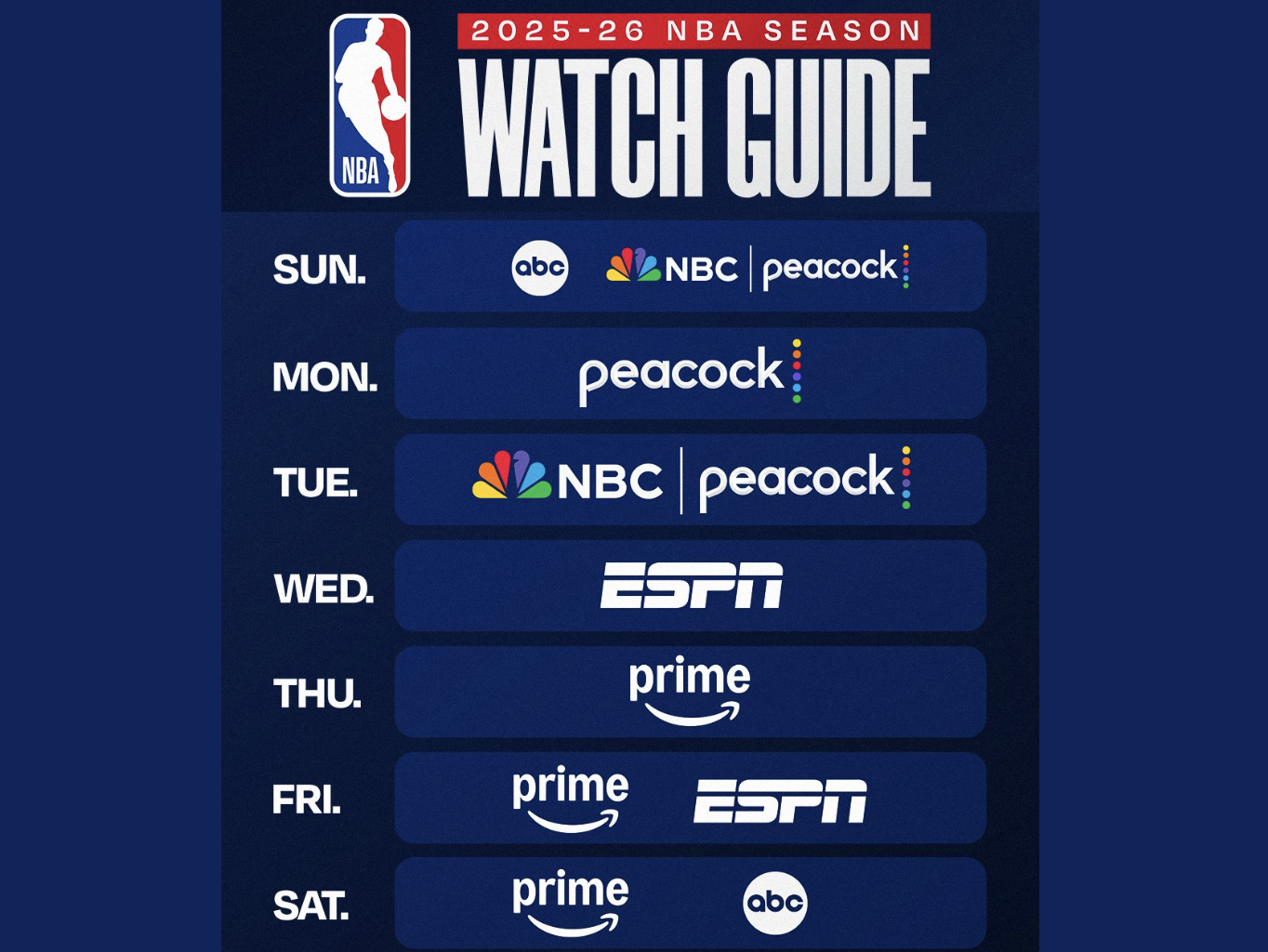
More platforms create more access, but they also make the habit harder to maintain.
This structural shift coincides with a generational transition. LeBron James entered the league in 2003. Stephen Curry reshaped it beginning in 2015. Kevin Durant anchored championship narratives for more than a decade. Their overlapping careers created sustained mythology that drove some of the most watched Finals of the modern era. As they move deeper into the latter stages of their careers, a new wave has emerged. Nikola Jokić, Luka Dončić, Giannis Antetokounmpo, and Victor Wembanyama represent elite talent and the league’s global expansion. They generate enormous digital engagement and international interest, yet mythology is not built on metrics alone. It emerges from repeated, high stakes encounters that audiences feel compelled to witness in real time.
The product itself has also evolved toward efficiency. In 2004 teams averaged roughly 14 three point attempts per game. Today that figure exceeds 34, reflecting a broader optimization of spacing and shot selection. Offensive efficiency sits at historic highs, but stylistic distinctions can blur under uniform strategic approaches. When aesthetic variation compresses and distribution fragments, the emotional density of a showcase exhibition diminishes.
Taken together, these changes describe transition rather than decay. The NBA is evolving from a broadcast first league into an internet native entertainment ecosystem. That transformation has unlocked commercial acceleration and global ubiquity, yet it has also weakened synchronization. Cultural dominance loses its impact when it is not shared in real time, and reach alone rarely creates meaning without ritual to anchor it.
Rebuilding that synchronization will require design rather than nostalgia. Within an 82 game season, very few nights are structurally distinct from the rest. Elevating select nationally broadcast games into consistently scheduled cultural moments would allow anticipation to build across platforms in advance rather than relying on reactive amplification. Structured rivalry arcs, compressed into shorter windows, would give narratives time to accumulate weight instead of dissipating across months. Incentives tied to tangible competitive outcomes, whether through playoff positioning or meaningful financial stakes, could restore urgency to events that currently function more as content than consequence.
The league’s digital dominance remains a formidable asset. Billions of views represent an extraordinary top of funnel advantage, but the strategic challenge lies in converting ambient engagement into shared experiences that audiences choose to attend simultaneously. In an era defined by infinite content and fractured attention, ritual does not emerge by accident. It must be constructed deliberately.
Basketball remains ubiquitous. Whether it regains a stronger sense of collective gravity will depend not on reducing its reach, but on shaping that reach into moments significant enough to experience together.